
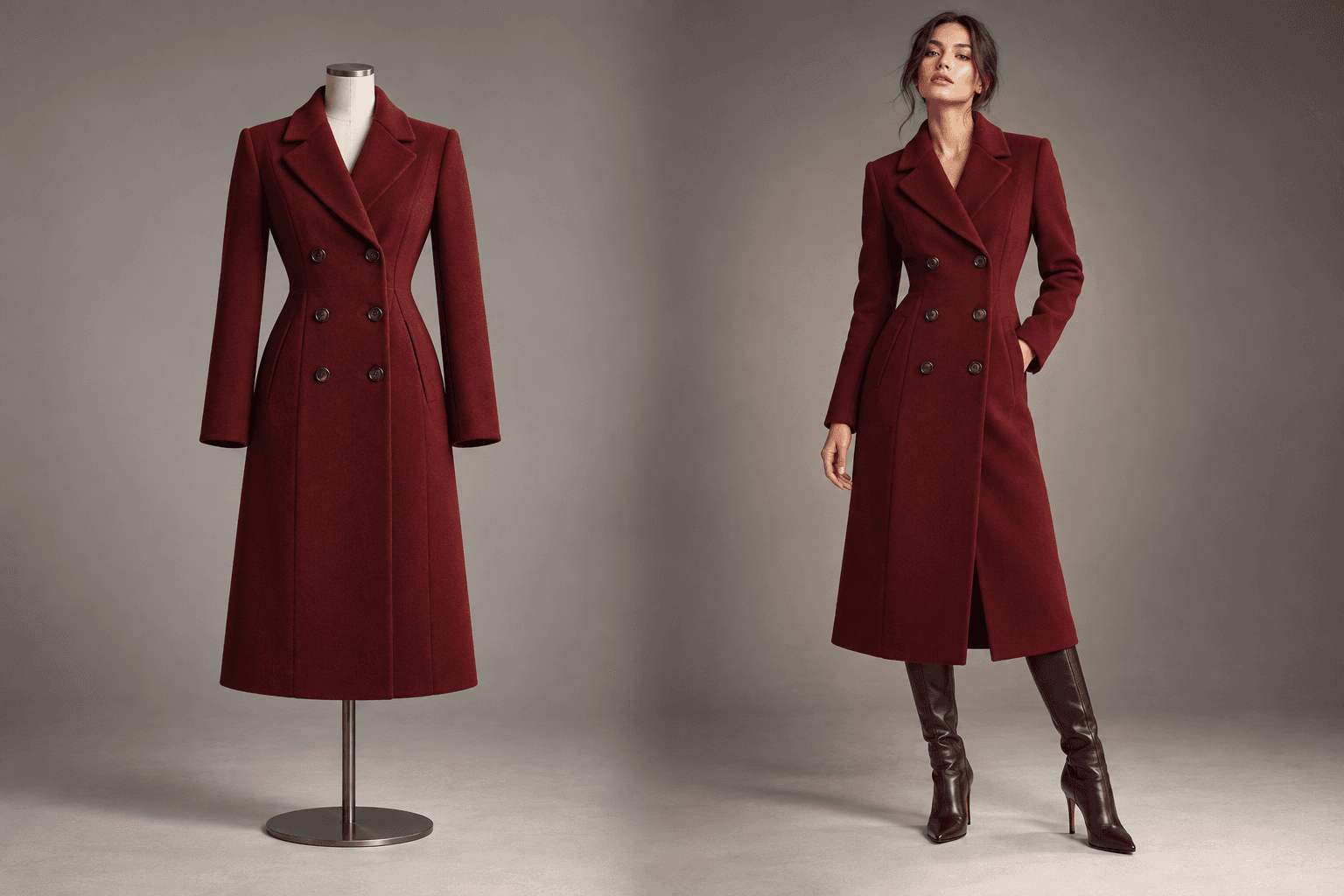
AI model photography turns existing garment images, including flat lays, ghost mannequin photography and product shots, into realistic on-model imagery. Working from these references can reduce the complexity of casting, location planning and physical production for each new visual.
For fashion brands, those assets can support e-commerce product pages, campaigns, lookbooks and advertising. Each application calls for its own approach, from consistent catalogue views to a carefully art-directed collection launch.
The standard remains the garment: its cut, fabric, details and fit must stay accurate, with consistent models and lighting where the brief requires them. Wonderframe combines AI-powered production with human creative direction, retouching and quality control to create imagery that feels premium and stays true to the product.
What AI model photography actually changes
AI model photography combines generative AI with real garment references such as flat lays, ghost mannequin photography, product images and existing model photography.
A garment photographed once can appear on different models, in different poses, against different backgrounds and eventually inside entirely different campaign worlds.
The original product image stops being just a finished asset.
It can become source material for an ongoing visual-production system.
For fashion brands, that changes the question from:
What did we capture during the shoot?
to:
What can we create from the product assets we already have?
What Can Fashion Brands Create With AI Model Photography?
AI On-Model Photography for E-commerce
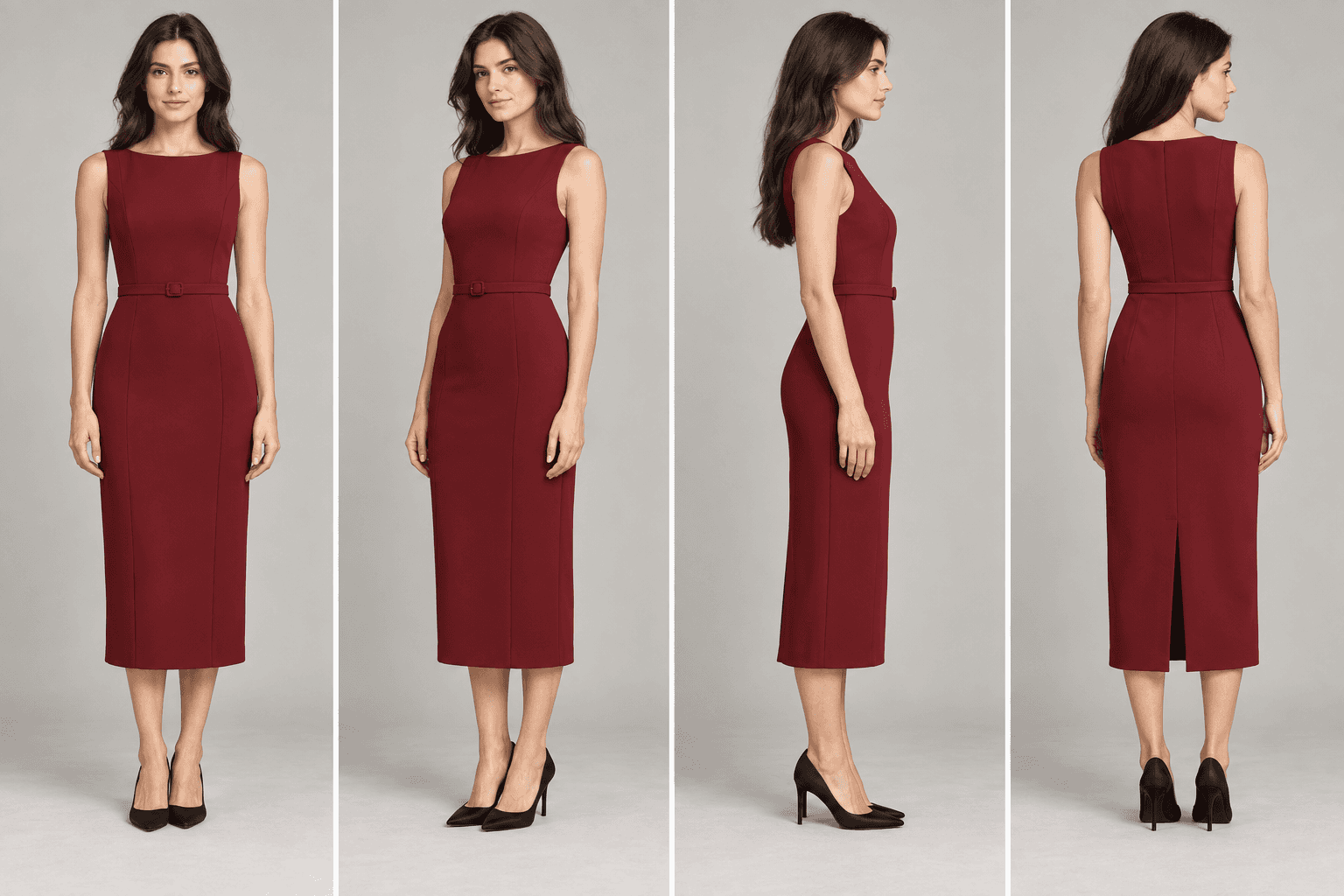
Create on-model product page imagery from clear garment references, with agreed poses, framing and backgrounds. Review each view for garment detail, fit and consistent lighting before adding it to the catalogue.
Fashion Campaign Photography
Build campaign imagery around a defined concept, model identity and visual world. Human art direction and retouching refine the atmosphere while keeping the collection’s materials, construction and proportions under scrutiny.
Lookbooks and Collection Launches
Present a collection through a coherent sequence of looks, using recurring models, lighting and styling. Plan full-length views and selected details together so buyers and customers can understand how the pieces relate.
Advertising and Social Media
Develop channel-specific compositions and crops from an approved creative direction, leaving room for campaign copy where needed. For fashion brands, review every variation for product accuracy and a consistent visual identity before delivery.
Speed changes how fashion brands create
Traditional production takes time.
Models need to be cast. Locations need to be secured. Products need to arrive. Photographers, stylists and crews need to be coordinated. The shoot happens, images go through post-production, and only then can the final assets begin moving into e-commerce, advertising and social channels.
AI can compress significant parts of that process.
Once strong product references and a visual direction exist, brands can create additional imagery without rebuilding the entire production around every new requirement.
That can mean faster launches, faster campaign development, more content around each collection and the ability to respond to opportunities after the original shoot has finished.
Speed isn’t only an operational advantage. It creates more room to experiment.
Ideas that previously might have been abandoned because there wasn’t enough time to organize another production can now be explored much later in the process.
The world becomes your location
Location has always had a price.
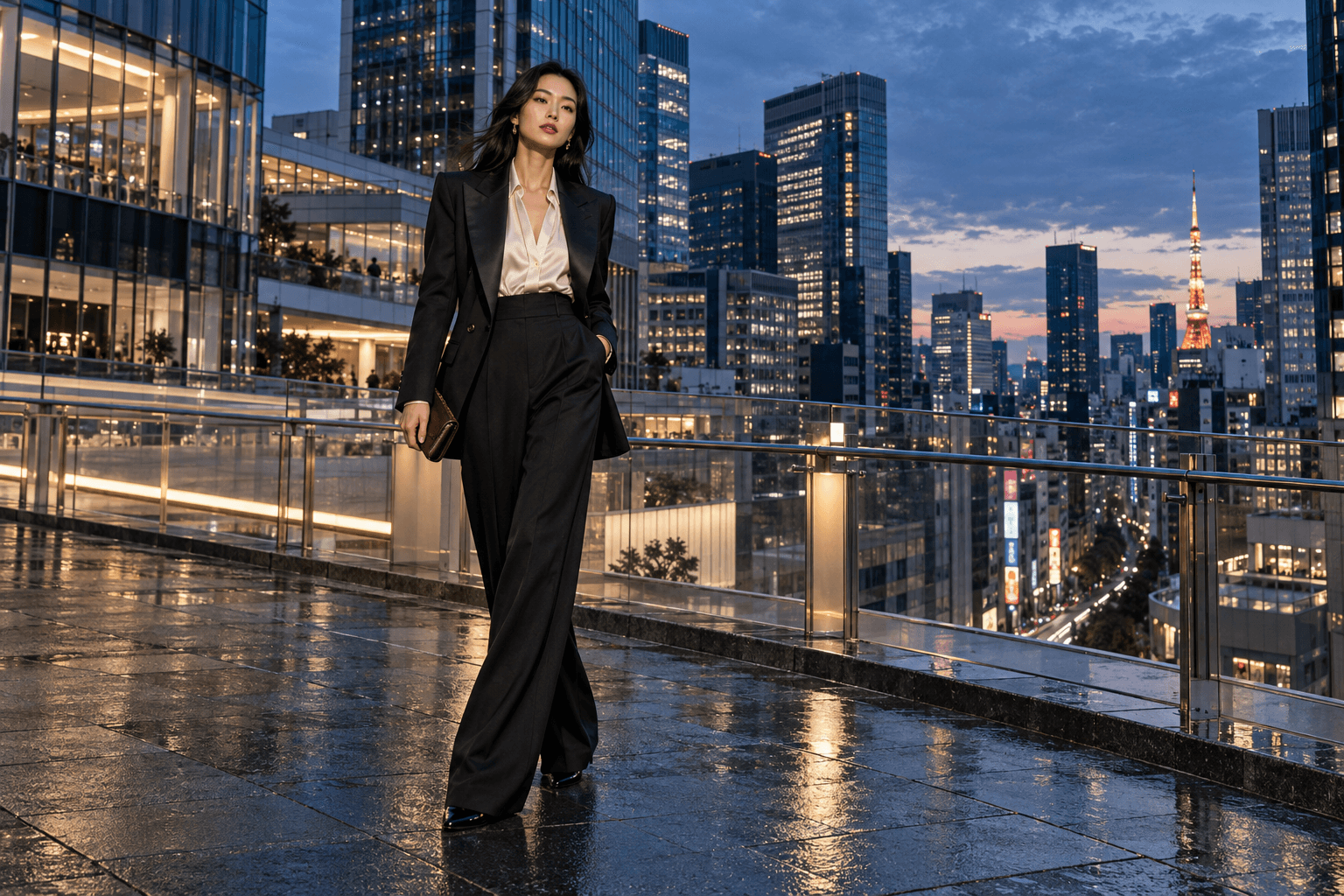
A campaign in Paris, Tokyo, the Mediterranean, the Alps or the desert can mean flights, accommodation, permits, transportation, equipment, models, crew and days of production.
Sometimes the creative idea is compromised before production even begins because the location simply doesn’t fit the budget.
AI changes that constraint.
A collection can exist on a Mediterranean coastline, inside a brutalist villa, on the streets of Tokyo, in a remote landscape or within an environment that exists only in the creative director’s imagination — without physically moving an entire production there.
And the objective doesn’t have to be obvious AI fantasy.
With strong product references, art direction, production and refinement, brands can create hyper-realistic campaign imagery that feels as though the production actually happened there.
The location becomes a creative decision rather than primarily a logistical one.
The question begins to move from:
Can we afford to produce this?
to:
What should we create?
That may ultimately be one of AI’s most important contributions to fashion imagery.
Casting is no longer limited in the same way by budget
Casting has traditionally been another major production constraint.
Large fashion brands can access internationally represented models, experienced talent and extensive casting processes. For smaller labels, that level of casting can consume a significant part of the production budget before the first photograph is taken.
AI expands what is accessible.
Brands can develop sophisticated model identities that match their positioning, customer and creative direction without carrying the traditional cost structure of premium international casting for every production.
Age, appearance, body type, styling, attitude and overall aesthetic can become part of a deliberate brand system.
And those models don’t necessarily have to disappear after one campaign.
A recurring model or cast can potentially appear across collections, markets and seasons, helping establish a recognizable visual identity.
Premium casting aesthetics are becoming accessible to brands without premium casting budgets.
The visual gap between small and large brands is getting smaller
For decades, production budget was visible in fashion imagery.
The world’s largest fashion brands could afford exceptional photographers, models, locations, sets, styling teams and post-production.
A smaller label could have an equally interesting product or creative idea without having the production resources required to express it at the same level.
AI is beginning to change that equation.
A young fashion brand can now create imagery with a level of ambition that would previously have required a significantly larger production.
A relatively simple set of product assets can become the foundation for sophisticated campaign worlds, international locations and an ongoing stream of high-end visual content.
That doesn’t mean every brand suddenly produces exceptional work.
Removing production constraints doesn’t remove the need for taste.
In many ways, it makes creative direction more important.
When more brands have access to powerful production technology, the differentiator increasingly becomes what they choose to create with it.
For smaller brands, that creates a significant opportunity: not to imitate the world’s largest fashion houses, but to compete for attention with the same level of visual ambition.
Not every fashion image has the same job
One of the mistakes in discussing AI fashion imagery is treating every image as though it belongs to the same production process.
It doesn’t.
Fashion brands generally have two very different visual requirements.
High-volume PDP imagery
E-commerce requires scale.
Hundreds or thousands of products may need consistent on-model imagery with controlled poses, framing, lighting and backgrounds.
The purpose of these images is primarily commercial.
Customers need to understand the garment. The brand needs consistency across the catalogue. Production needs to move quickly without quality deteriorating as volume increases.
Here, the priorities are:
Product accuracy. Consistency. Speed. Repeatability.
Creating ten strong images isn’t enough.
The system needs to work across hundreds or thousands.
Highly curated editorial imagery
Campaign imagery has a different job.
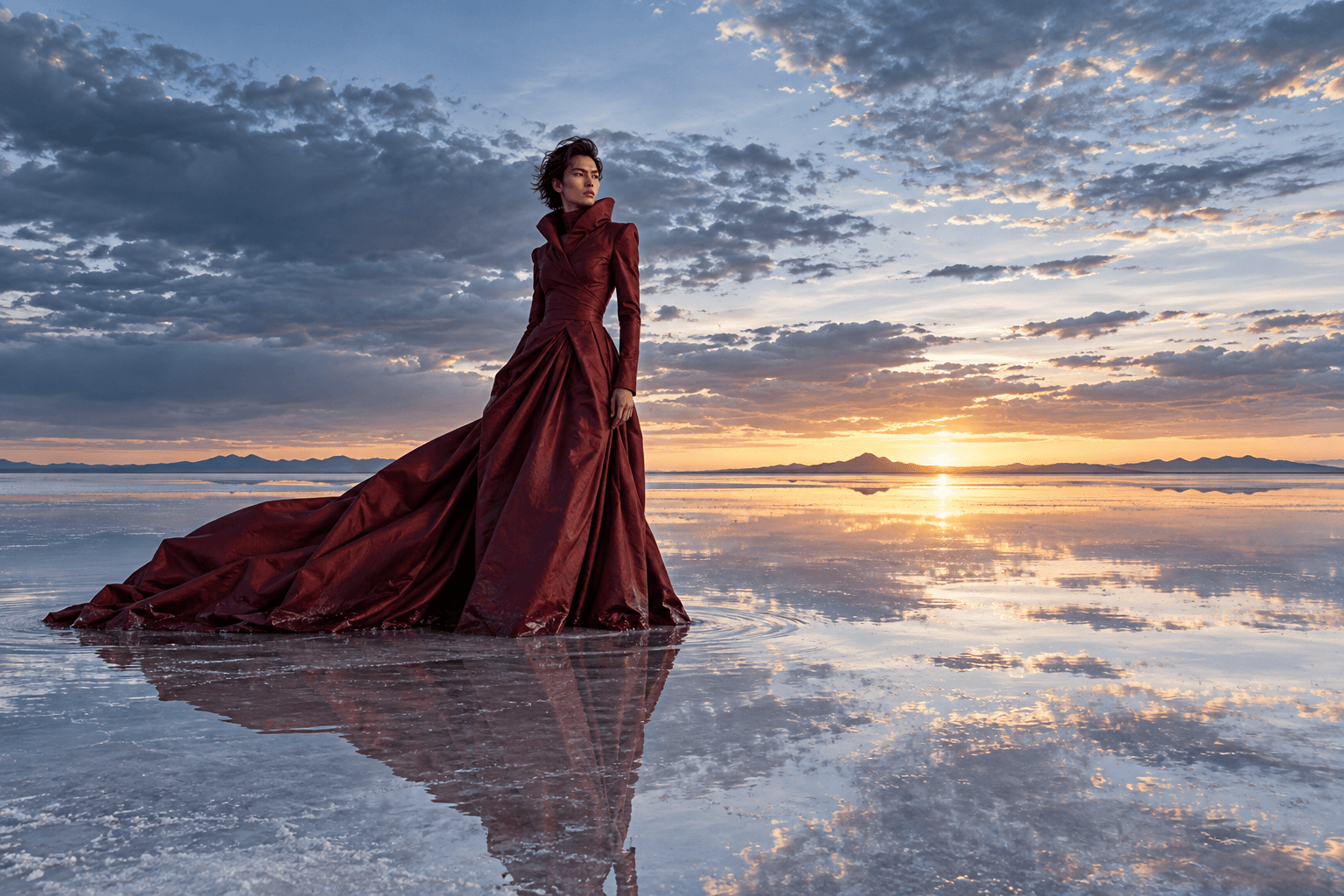
These images are produced more selectively and receive significantly more creative direction and refinement.
The objective isn’t volume.
It’s to create the images that define how the collection feels.
These assets can become lookbook imagery, campaign visuals, Instagram content, paid advertising, website hero imagery and launch material.
Here, the priorities shift toward:
Concept. Casting. Location. Styling. Composition. Atmosphere. Storytelling.
A brand might need hundreds of consistent PDP images — but only ten exceptional editorial images that make people want the collection.
AI can serve both ends of fashion production.
At one end, it becomes a scalable production system.
At the other, it becomes a highly flexible creative-production tool.
The production process changes because the purpose of the image changes.

Turn Your Collection Into Campaign-Ready Imagery.
Whether you need consistent on-model photography for hundreds of products or a curated fashion campaign, Wonderframe can develop a production approach around your collection.
The garment has to survive the transformation
Imagine a black blazer.
AI can generate a beautiful model wearing a black blazer relatively easily.
But is it the brand’s blazer?
Look closer.
The lapel may be wider. The jacket may be shorter. The shoulder construction may have changed. A button may have disappeared. The pockets may have moved. The fabric may behave differently.
The image can be photorealistic while the product is wrong.
At that point, you haven’t photographed the original blazer differently.
You’ve created another blazer.
This is one of the fundamental challenges of commercial AI fashion production.
Believable isn’t necessarily accurate.
Looking real and being right are different problems
There are two questions that need to be asked about an AI fashion image.
Would I believe this photograph is real? | And | Would a customer receive the garment shown in this photograph? |
The first question is about image quality.
The second is about product truth.
Both matter.
Hyper-realism attracts attention. Product accuracy protects the brand, the customer experience and the commercial usefulness of the image.
The best AI fashion production needs to achieve both.
Fit is part of product accuracy
Clothing is different from many other products because it changes when it meets the body.
A silk dress behaves differently from denim. A structured jacket holds its shape differently from a lightweight shirt. An oversized garment shouldn’t suddenly appear fitted simply because the generated image looks better that way.
Fit isn’t merely aesthetic.
Fit is product information.
When a customer looks at on-model imagery, part of what they’re trying to understand is how the garment will behave on a body.
That means product accuracy isn’t only about reproducing buttons, seams and colors.
The relationship between garment and body also has to remain believable.
How a garment becomes an AI model image
01 — Establish the productProduction begins with understanding the garment. References may include flat lays, ghost mannequin photography, existing PDP imagery, close-up details or previous model photography. Silhouette, construction, color, material, pattern, closures, logos and important design details need to be understood before creative transformation begins. Different garments require different levels of reference. | 02 — Define the castingThe model should serve the brand rather than simply look impressive. Age, body type, appearance, hair, styling, attitude and overall character become creative decisions. The question changes from: Who can we cast on Tuesday? to: Who should this brand consistently look like? |
03 — Define the visual worldIs this a clean PDP image or an editorial campaign? Lighting, camera language, pose, environment, styling and composition all change depending on the answer. When almost anything can be generated, knowing what should be generated becomes increasingly valuable. | 04 — Build the imageOnce product, casting and creative direction are established, different poses, compositions and executions can be developed rapidly. This is where AI creates extraordinary flexibility. But generation is only one part of the production process. |
05 — Put the product back under scrutinyNow the image needs to be inspected again as a commercial asset. Neckline. Sleeves. Hem. Buttons. Pockets. Seams. Print. Logo. Color. Proportions. Fit. The image isn’t finished when it looks good. It’s finished when it looks good and the product is still the product. | 06 — Make it repeatableThen comes the harder question: Can you do it again? And again? Can the model remain recognizable? Can lighting stay consistent? Can styling remain coherent? Can the next fifty garments achieve the same standard? Commercial production requires repeatability, not occasional spectacular generations. |
The rise of the brand model
AI may also change how brands think about casting itself.
Instead of finding a completely new cast for every production, a brand can begin developing recurring model identities or a recognizable family of models.
The same visual identity can potentially appear across e-commerce, campaigns, social content and future collections.
This creates something between traditional casting and a brand asset:
a recurring visual identity that can be directed, styled and deployed across production.
The interesting question may eventually stop being whether an AI model looks real.
It may become whether customers recognize who belongs inside a particular brand world.
One garment can now have several lives
A garment photographed for an e-commerce page no longer has to remain an e-commerce image.
The same underlying product information can become:
PDP imagery.
Additional on-model views.
A campaign image.
An Instagram asset.
Paid advertising.
A seasonal execution.
A regional variation.
A completely different visual world months later.
Traditionally, many of these outputs required separate production decisions.
AI can allow them to originate from the same underlying product information.
That changes both the economics and the speed of fashion content production.
Instead of asking how many usable images were captured during a shoot, brands can begin asking:
How many useful visual assets can we create from the product information we already have?
Ten images and 1,000 images are different businesses
Producing ten AI fashion images is primarily a creative challenge.
Producing 1,000 becomes an operational one.
How are product references prepared?
How are garments matched to models?
How is consistency maintained?
How are files named and delivered?
Who checks product accuracy?
How are revisions handled?
How are multiple aspect ratios produced?
How do you prevent the same mistake from appearing across an entire catalogue?
At scale, workflow becomes as important as generation quality.
The best generation model does not automatically create the best production system.
Where AI model photography works particularly well
AI becomes especially useful when brands already have strong product references but need more visual output.
That might mean extending an existing shoot, producing additional PDP imagery, creating social variations, exploring campaign concepts, adapting creative for different markets or generating seasonal content without organizing another complete production.
It can also be used before a traditional shoot.
Brands can explore casting, environments, compositions and campaign directions before committing significant production budgets.
Sometimes AI replaces production. Sometimes it extends it. And sometimes it makes the eventual shoot more informed.
Where AI still struggles
AI models are improving quickly, but fashion remains technically demanding.
Patterns can drift |
Logos can distort |
Buttons move |
Jewelry changes |
Sleeves become longer |
Bags gain hardware that doesn’t exist |
Layered outfits merge together |
Colors shift |
Hands interact incorrectly with clothing |
Model identity can change between images |
These problems don’t make AI unsuitable for fashion.
They explain why professional AI fashion production requires more than prompting.
As generation models improve, production discipline doesn’t disappear.
It simply moves to different parts of the workflow.
AI versus the traditional fashion shoot
Traditional photography remains extraordinarily valuable.
It captures a real garment on a real person in a real moment.
Major campaigns, celebrity collaborations, complex movement, authentic interaction and culturally important productions may continue to justify substantial physical shoots.
AI doesn’t need to eliminate that.
Its larger advantage may be what happens afterward.
The photographs, product references and campaign assets created during a shoot can become ingredients for future production.
The emerging fashion-production stack may increasingly look like:
Real product → photography → AI production → retouching → human creative direction
The shoot doesn’t necessarily disappear.
It becomes more valuable because its output can travel further.
What does this do to the economics?
There is no particularly useful universal “price per AI model image.”
Generating an image can be inexpensive.
Producing a commercially usable fashion asset is different.
The real production cost can include product preparation, model development, creative direction, generation, retouching, garment validation, revisions, quality control and delivery.
Volume also changes the economics significantly.
A highly curated campaign image and the 700th standardized PDP image are solving completely different problems.
The better question isn’t:
How much does it cost to generate an AI image?
It’s:
How much does it cost to produce an image the brand can approve and actually use?
Will AI replace fashion models?
Some fashion imagery will undoubtedly be produced differently.
But models bring much more than physical appearance to fashion.
They bring identity, movement, personality, cultural relevance, audience and sometimes enormous commercial value.
AI doesn’t eliminate that.
What it changes is the assumption that every new visual asset requires another physical casting and shoot.
The more important transformation is production optionality.
Brands have more ways to decide how an image should be made.
The real opportunity is creative freedom
The first wave of generative AI was largely about proving that convincing images could be generated.
The next phase is more interesting.
Products can begin moving between models, environments, markets, seasons and channels without rebuilding a physical production every time.
A photoshoot can become source material.
A garment can become a reusable visual asset.
A small brand can think with the visual ambition of a much larger one.
A creative director can imagine a campaign around the strongest idea rather than the easiest production.
The photograph stops being the end of production. It becomes the beginning of what can be produced next.
AI model photography at Wonderframe
At Wonderframe, we approach AI model photography as fashion production rather than simply model generation.
We work across two distinct needs.
For high-volume e-commerce and PDP production, the focus is product accuracy, consistency, speed and scale.
For editorial production, the focus shifts toward concept, casting, location, atmosphere and highly curated campaign imagery for lookbooks, social media, advertising and brand campaigns.
AI gives us the ability to create models, environments and visual worlds that would traditionally require significantly larger productions.
But creative freedom only becomes commercially valuable when the garment remains recognizable, accurate and usable.
That’s why our process combines AI production with human creative direction, retouching and product-focused quality control.
The objective isn’t simply to make production cheaper.
It’s to remove unnecessary constraints between a brand and what it wants to create.
Any model. Any location. Any visual world.
More creative freedom. The same product truth.